Whidbey Island & Anacortes Real Estate + Local Living
Understanding HOA Communities on Whidbey Island
August 28, 2026
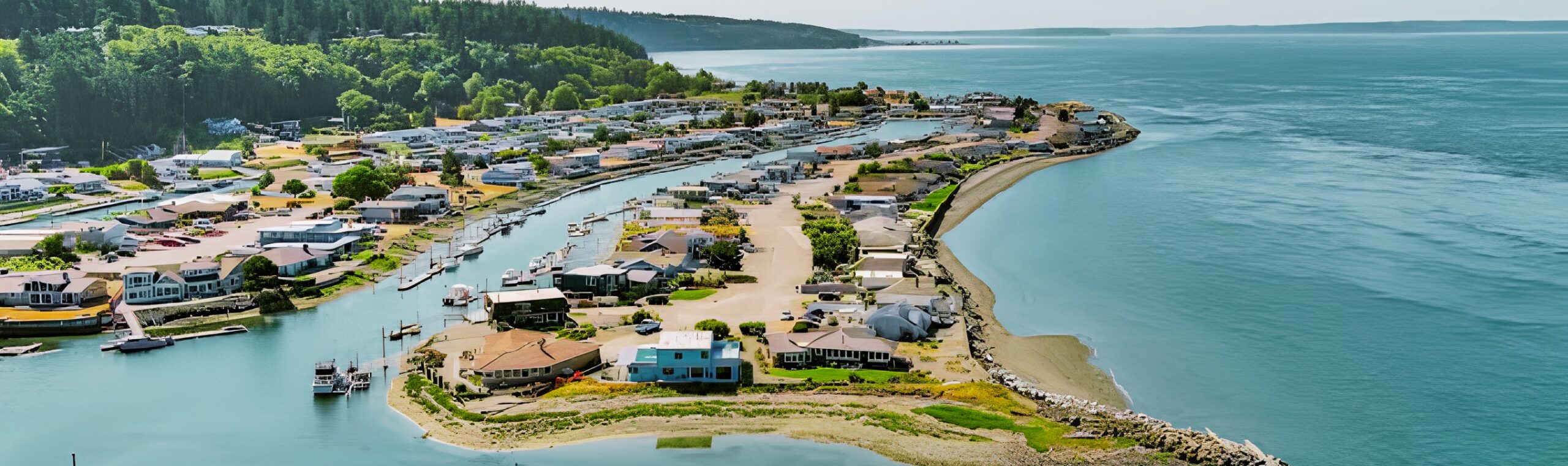
Are there HOA communities on Whidbey Island?
Yes. There are HOA communities on Whidbey Island, although many island homes are not part of a homeowners association.
Homeowners associations are most commonly found in planned developments, condominium communities, and neighborhoods where residents share private infrastructure or amenities. Depending on the community, HOA dues may support private roads, beaches, parks, clubhouses, marinas, boat launches, water systems, stormwater facilities, or other jointly maintained property.
Because every association is different, buyers should review the governing documents, financial records, assessments, restrictions, and responsibilities connected to the specific home they are considering.
Not Every Whidbey Island Home Has an HOA
One of the questions we frequently hear from buyers relocating to Whidbey Island is:
“Do homes here have HOAs?”
The answer is that it depends on the property and neighborhood.
Unlike areas dominated by newer master-planned subdivisions, Whidbey Island offers a wide range of housing environments. Buyers may find newer developments, established waterfront communities, condominium associations, rural properties, private-road neighborhoods, and older homes with few or no shared amenities.
Some properties belong to active homeowners associations with regular dues and detailed rules. Others may have a smaller road-maintenance association or shared-water agreement. Many homes have no formal association at all.
We’re Jeff and Kara Vallejo, Realtors serving Whidbey Island and Anacortes, and helping buyers understand these differences is an important part of finding a home that fits both their lifestyle and budget.
What Is a Homeowners Association?
A homeowners association, commonly called an HOA, is an organization created to manage certain shared responsibilities within a residential community.
Property owners within the association are generally required to follow its governing documents and contribute toward approved community expenses.
Depending on the neighborhood, an HOA may be responsible for:
- Maintaining private roads
- Managing common parks
- Maintaining beach access
- Operating a clubhouse
- Maintaining a swimming pool
- Managing tennis or pickleball courts
- Operating a marina or boat launch
- Maintaining landscaping in common areas
- Managing a community water system
- Maintaining drainage or stormwater facilities
- Carrying insurance on shared property
- Enforcing community rules
- Collecting regular and special assessments
The association’s authority and responsibilities are generally described in documents such as its declaration, covenants, conditions and restrictions, bylaws, rules, resolutions, and recorded plats.
Why Some Whidbey Island Neighborhoods Have HOAs
Whidbey Island contains many neighborhoods where residents rely on private infrastructure rather than services maintained entirely by a city or county.
For example, a community may have a privately maintained road, shared well, neighborhood beach, community dock, drainage system, or recreational area.
An association can provide an organized way to:
- Collect money for repairs
- Schedule maintenance
- Purchase insurance
- Set rules for shared facilities
- Plan long-term projects
- Resolve community issues
- Maintain reserve funds
- Coordinate vendors and contractors
Without an established process, neighbors may have to negotiate every repair or expense individually.
HOA Communities Are Not All the Same
The term “HOA” can describe very different types of communities.
One Whidbey Island association may collect a modest annual assessment primarily for private-road maintenance. Another may manage a clubhouse, swimming pool, marina, water system, beaches, parks, and extensive common property.
Before deciding whether the dues are reasonable, buyers should consider what the association actually provides.
A higher assessment is not automatically a bad sign if it supports valuable infrastructure and the association is financially healthy. Similarly, very low dues are not always an advantage if the community lacks sufficient reserves for future repairs.
Common HOA Amenities on Whidbey Island
Shared amenities are one of the main reasons some buyers actively seek HOA communities.
Availability varies by neighborhood, but possible amenities include the following.
Private Beach Access
Some Whidbey Island communities provide residents with access to a neighborhood beach or shoreline area.
Private or community access may offer:
- A quieter beach experience
- Convenient shoreline access
- Areas for kayaking or paddleboarding
- Picnic space
- Views of Puget Sound, Saratoga Passage, Admiralty Inlet, or the Strait of Juan de Fuca
Buyers should confirm what “beach access” legally includes. Access may be limited to a pathway, specific parcel, tidelands, community lot, or designated recreational area.
Community Parks and Open Spaces
An HOA may maintain grassy areas, playgrounds, trails, picnic spaces, or wooded common land.
These amenities can be especially appealing to households that want outdoor space without personally maintaining a large property.
Marinas, Docks, and Boat Launches
Some waterfront communities may have shared boating facilities.
Possible amenities include:
- Boat ramps
- Community docks
- Marina slips
- Kayak storage
- Beach-launch areas
- Trailer storage
Access may be subject to separate fees, waiting lists, vessel restrictions, seasonal conditions, or additional rules.
Ownership in the neighborhood does not always guarantee a marina slip.
Clubhouses and Recreational Facilities
Some communities maintain clubhouses or meeting spaces that may be used for:
- HOA meetings
- Community events
- Private gatherings
- Clubs and activities
- Holiday celebrations
- Exercise classes
- Social events
Other possible amenities include pools, sports courts, playgrounds, or picnic shelters.
Private Roads
Private roads are common in certain island neighborhoods.
When a road is not maintained by a government agency, the HOA or property owners may be responsible for:
- Paving
- Gravel replacement
- Grading
- Pothole repair
- Drainage
- Vegetation management
- Signage
- Culvert work
- Emergency repairs
- Limited snow or ice response
Buyers should understand both the current condition of the road and how future work will be funded.
Community Water Systems
Some neighborhoods operate shared water systems rather than individual private wells.
HOA or water-system charges may support:
- Water testing
- Pump maintenance
- Storage tanks
- Treatment equipment
- Distribution lines
- Regulatory compliance
- Emergency repairs
- Long-term infrastructure replacement
The community water system may be operated by the HOA, a separate water association, or another entity. Buyers should confirm which organization is responsible.
What HOA Dues May Cover
HOA assessments may be billed monthly, quarterly, semiannually, or annually.
Depending on the association, dues may pay for:
- Road maintenance
- Common-area landscaping
- Shared utility expenses
- Insurance for common property
- Management services
- Legal and accounting costs
- Water-system operations
- Marina or clubhouse expenses
- Reserve contributions
- Repairs and replacements
- Community communications
- Administrative expenses
Buyers should request a clear explanation of what the regular assessment includes and which expenses are billed separately.
What Is a Special Assessment?
A special assessment is an additional charge imposed outside the regular dues.
An association may approve a special assessment when it needs money for a major expense that is not fully covered by its operating budget or reserve account.
Examples may include:
- Major road reconstruction
- Water-system repairs
- Dock replacement
- Clubhouse renovation
- Storm-damage repairs
- Drainage improvements
- Insurance-related expenses
- Legal costs
- Emergency projects
Buyers should ask whether any special assessments have been approved, proposed, discussed, or anticipated.
Meeting minutes can sometimes reveal projects or financial concerns that are not obvious from the current dues alone.
Why the Reserve Fund Matters
A reserve fund is money set aside for major repairs and replacements that are expected over time.
A well-planned reserve fund may help pay for items such as:
- Roads
- Roofs on shared buildings
- Pools
- Docks
- Water equipment
- Drainage systems
- Exterior structures
- Recreational facilities
A low reserve balance does not automatically mean the association is poorly managed, but it deserves careful review.
Buyers should compare:
- The current reserve balance
- The age and condition of shared assets
- Planned projects
- Reserve-study recommendations
- Current contribution levels
- Recent special assessments
Washington law requires associations subject to the Washington Uniform Common Interest Ownership Act to maintain certain financial and association records, including current budgets and accounting records.
What Is a Reserve Study?
A reserve study evaluates the expected life and replacement cost of major common components and recommends how much the association should save.
It may review assets such as:
- Private roads
- Clubhouses
- Pools
- Roofs
- Docks
- Water systems
- Retaining structures
- Drainage facilities
The study can help buyers understand whether current dues appear sufficient to meet future needs.
Not every association will have the same reserve-study obligations, and the applicable rules may depend on the community’s legal structure and governing statute.
HOA Rules and Restrictions
Homeowners associations generally operate under recorded documents and adopted rules.
Restrictions may address:
- Exterior paint colors
- Roofing materials
- Fence design
- Landscaping
- Tree removal
- Parking
- Boats and trailers
- Recreational vehicles
- Detached structures
- Home additions
- Pets
- Noise
- Business use
- Rentals
- Holiday decorations
- Architectural changes
- Property maintenance
Some associations have only a few basic requirements. Others use detailed architectural standards and formal approval processes.
Buyers should read the actual documents instead of relying on a summary from a listing, seller, neighbor, or association representative.
Short-Term Rental Rules
Buyers interested in vacation-rental income should pay especially close attention to HOA restrictions.
An association may:
- Prohibit short-term rentals
- Set a minimum rental period
- Limit the number of rentals
- Require registration
- Require owner occupancy
- Impose parking or guest rules
- Restrict advertising
- Require additional fees
HOA approval does not replace county, city, health, septic, business-license, or other legal requirements.
A property must satisfy all applicable rules, not only the association’s restrictions.
Boats, RVs, and Trailers
Many buyers move to Whidbey Island because they enjoy boating, camping, fishing, or other outdoor activities.
Before buying in an HOA, determine whether the governing documents regulate:
- RV parking
- Boat storage
- Trailer storage
- Commercial vehicles
- Driveway parking
- Street parking
- Temporary loading
- Detached garages
- Storage sheds
A property may have enough physical space for an RV or boat but still be subject to restrictions preventing long-term outdoor storage.
Architectural Approval Requirements
Some exterior changes may require approval from an architectural review committee or HOA board.
Projects that could require approval include:
- Repainting
- Replacing siding
- Installing a fence
- Building a shed
- Adding a deck
- Installing solar panels
- Changing landscaping
- Constructing an addition
- Adding a garage
- Removing trees
- Installing exterior equipment
Buyers planning renovations should review the approval process before purchasing.
They should also investigate county permitting, setbacks, critical areas, septic limitations, shoreline rules, and other restrictions that may apply independently of the HOA.
The Potential Benefits of HOA Living
For some homeowners, an HOA provides meaningful advantages.
Possible benefits include:
- Shared recreational amenities
- Organized road maintenance
- Private beach access
- Community boating facilities
- Maintained common areas
- Clear community standards
- A process for addressing shared concerns
- Long-term infrastructure planning
- Social events and neighborhood involvement
Buyers who value predictability and shared amenities may find an HOA community appealing.
Reasons Some Buyers Prefer a Non-HOA Property
Other buyers prefer homes without an HOA because they want fewer private restrictions.
Possible reasons include:
- Greater flexibility for exterior changes
- More freedom with landscaping
- Easier RV or boat storage
- Fewer approval requirements
- No regular HOA assessment
- Less community oversight
- More flexibility for outbuildings
- Fewer restrictions on property use
However, a property without an HOA can still be subject to recorded covenants, easements, road-maintenance agreements, zoning rules, permits, shoreline restrictions, or other legal obligations.
“No HOA” does not necessarily mean “no restrictions.”
An HOA Is Different From Recorded Covenants
A home may be subject to covenants even when there is no active association collecting dues.
Recorded covenants may continue to restrict:
- Property use
- Building design
- Minimum home size
- Animals
- Subdivision
- Commercial activity
- Manufactured homes
- Exterior appearance
- Rentals
Buyers should review the title report and recorded documents for the individual property.
They should not assume that an inactive HOA or lack of regular dues makes recorded restrictions unenforceable.
Road-Maintenance Agreements Without an HOA
Some Whidbey Island properties share a private road but do not belong to a traditional homeowners association.
Instead, owners may be subject to:
- A recorded road-maintenance agreement
- An easement
- Informal cost sharing
- A road association
- A maintenance covenant
Buyers should determine:
- Who maintains the road
- How expenses are divided
- Whether payments are current
- Whether disputes exist
- Whether the road meets lender requirements
- Whether emergency access is adequate
- Whether major repairs are planned
Private-road obligations can be financially significant even when the listing says there is no HOA.
Questions to Ask Before Buying in an HOA
Before purchasing, buyers should ask:
- What are the current dues?
- How often are dues collected?
- What do the dues cover?
- Are any services billed separately?
- When were dues last increased?
- Are increases being discussed?
- Are special assessments pending?
- What is the reserve balance?
- Is there a current reserve study?
- Are there delinquent owners?
- Is the association involved in litigation?
- What insurance does the association carry?
- Are rentals restricted?
- Are pets restricted?
- Can boats and RVs be stored on the property?
- Are exterior changes subject to approval?
- Who maintains the roads?
- Who manages the water system?
- Are there marina or dock waiting lists?
- Are there unresolved maintenance projects?
The answers should be confirmed in writing whenever possible.
Documents Buyers Should Review
The exact document package will vary, but buyers may want to review:
- Declaration
- Covenants, conditions, and restrictions
- Bylaws
- Rules and regulations
- Articles of incorporation
- Current operating budget
- Recent financial statements
- Reserve study
- Reserve-account balance
- Current assessment schedule
- Special-assessment notices
- Insurance summary
- Recent meeting minutes
- Pending litigation information
- Violation or enforcement history
- Architectural guidelines
- Rental policies
- Water-system documents
- Road-maintenance documents
- Marina or amenity rules
- Resale certificate when applicable
Washington law requires a resale certificate for many resales within common-interest communities. The certificate may include financial, assessment, insurance, reserve, litigation, and governing-document information relevant to the buyer.
What Is an HOA Resale Certificate?
A resale certificate is a disclosure document prepared from the association’s records for the sale of an existing home or unit in a common-interest community.
Depending on the applicable Washington statute, it may disclose information such as:
- Current regular assessments
- Unpaid assessments
- Approved special assessments
- Anticipated assessments
- Association financial information
- Reserve funding
- Insurance coverage
- Pending litigation
- Governing documents
- Restrictions affecting the property
Under the Washington Uniform Common Interest Ownership Act, the resale-certificate provisions appear in RCW 64.90.640. Condominium resale certificates may also be governed by Washington’s Condominium Act, including RCW 64.34.425, depending on the property and applicable statute.
Because Washington common-interest communities may be governed by different statutes, buyers should rely on the documents and professional guidance applicable to the particular property.
Do Not Review Only the Current Dues
The current assessment is only one part of the financial picture.
A community with low dues may still have:
- Deferred maintenance
- Weak reserves
- An aging water system
- A deteriorating private road
- A dock approaching replacement
- Planned litigation expenses
- Insurance challenges
- A large upcoming assessment
A community with higher dues may already be funding these responsibilities more responsibly.
The better question is not simply, “How much are the dues?”
It is:
“What does the association own, what will it need to repair, and how is it preparing to pay for that work?”
Review Recent Meeting Minutes
Meeting minutes can provide useful context about the association’s current priorities.
They may reveal discussions concerning:
- Road repairs
- Water quality
- Insurance
- Rule enforcement
- Neighbor disputes
- Delinquent assessments
- Major repairs
- Reserve funding
- Rental restrictions
- Legal concerns
- Leadership changes
Read several months or, when available, one or two years of minutes rather than reviewing only the most recent meeting.
Look Beyond the Amenities
A private beach, pool, marina, or clubhouse may be appealing, but buyers should also consider the cost and responsibility attached to it.
Ask:
- How old is the amenity?
- What condition is it in?
- Who inspects it?
- Is it insured?
- Are repairs planned?
- Are there separate user fees?
- Is access guaranteed?
- Are there capacity limits?
- Is there a waiting list?
- Can guests use it?
An amenity is valuable only when its rules, cost, and availability match the buyer’s expectations.
HOA Dues and Mortgage Qualification
Regular HOA assessments generally become part of the buyer’s ongoing housing expense.
Lenders may consider HOA dues when evaluating affordability and debt obligations.
For condominiums or other common-interest properties, lenders may also review aspects of the association, such as:
- Insurance
- Financial condition
- Owner occupancy
- Litigation
- Delinquencies
- Property condition
- Project eligibility
Buyers should provide HOA information to their lender early rather than waiting until the end of the transaction.
HOA Insurance Does Not Replace Homeowner Insurance
An association may insure common property or certain shared structures, but that coverage does not necessarily protect everything connected to an individual home.
Buyers should speak with an insurance professional about:
- Dwelling coverage
- Personal property
- Liability
- Earthquake coverage
- Flood exposure
- Water backup
- Loss assessment coverage
- Coverage for association deductibles
- Short-term rental use
- Shared structures
The association’s master policy and the homeowner’s individual policy should be reviewed together to identify possible gaps.
Red Flags Buyers Should Investigate
Potential concerns may include:
- Missing financial statements
- Repeated special assessments
- Very low reserves
- Major deferred maintenance
- Uninsured or underinsured common property
- Unresolved litigation
- Numerous delinquent owners
- Frequent management turnover
- Missing meeting minutes
- Unclear road responsibilities
- Aging water infrastructure
- Informal financial practices
- Rules that conflict with the buyer’s plans
- Amenities that are closed or unusable
- Large projects without a funding plan
A red flag does not always mean the property should be rejected, but it may require additional investigation.
Questions to Ask Yourself
The decision is not only financial.
Consider how you feel about:
- Community rules
- Shared decision-making
- Architectural oversight
- Regular assessments
- Potential special assessments
- Neighborhood meetings
- Amenity sharing
- Parking restrictions
- Rental limitations
- Boat or RV rules
Some buyers find the structure reassuring. Others may feel restricted by it.
HOA Living for Military Buyers
Military households relocating to NAS Whidbey Island may have additional concerns.
Before buying, consider:
- Rental restrictions during a future PCS
- Property-management rules
- Minimum lease terms
- Tenant-registration requirements
- Parking for multiple vehicles
- Boat or RV storage
- Pet restrictions
- Exterior maintenance during deployment
- Association communication while away
A home that works well during the current assignment should also fit possible future relocation plans.
HOA Living for Second-Home Buyers
Second-home owners may appreciate an association that manages shared infrastructure and maintains common areas.
However, they should also review:
- Rental restrictions
- Guest policies
- Vacancy rules
- Landscaping responsibilities
- Winterization needs
- Water shutoff procedures
- Emergency contact requirements
- Remote meeting options
- Special-assessment notices
- Property-management rules
An HOA does not necessarily maintain the individual home unless the governing documents specifically say so.
Choosing Between HOA and Non-HOA Communities
There is no universally better choice.
An HOA community may be a good fit for buyers who want:
- Shared amenities
- Private beach access
- Organized road maintenance
- A community water system
- Neighborhood standards
- Social involvement
A non-HOA property may suit buyers who prioritize:
- Greater independence
- Fewer private rules
- RV or boat storage
- Flexible landscaping
- Space for outbuildings
- Rural living
Whidbey Island provides opportunities for both.
Frequently Asked Questions
Do all neighborhoods on Whidbey Island have HOAs?
No.
Many properties on Whidbey Island are not part of a formal homeowners association. HOAs are more common in certain planned developments, condominium communities, waterfront neighborhoods, and areas with shared roads, water systems, beaches, or recreational amenities.
Are HOA fees expensive on Whidbey Island?
HOA dues vary significantly.
Some associations collect a modest annual amount primarily for road maintenance or administrative expenses. Others collect monthly or quarterly assessments to support water systems, marinas, beaches, pools, clubhouses, parks, management, insurance, and reserve funding.
The amount should be evaluated alongside the services and financial obligations of the association.
Can I find a Whidbey Island home without an HOA?
Yes.
Homes without formal HOA membership can be found throughout Oak Harbor, Coupeville, Greenbank, Freeland, Langley, Clinton, and rural parts of the island.
However, buyers should still investigate covenants, easements, private-road obligations, shared wells, maintenance agreements, and recorded restrictions.
Can an HOA restrict short-term rentals?
An HOA’s governing documents may restrict or prohibit rentals, establish minimum lease periods, or impose other rental requirements.
Buyers should review the current documents and obtain professional advice regarding the enforceability and application of restrictions to the particular property.
County or city regulations may also apply.
Can an HOA charge a special assessment?
Associations may levy special assessments when permitted by their governing documents and applicable law.
Special assessments are commonly used for major repairs, emergencies, or projects not fully funded through regular dues and reserves.
Buyers should investigate both approved assessments and projects that are still being discussed.
Does an HOA maintain my home?
Not necessarily.
Most single-family HOAs maintain only common areas or shared infrastructure. The individual owner generally remains responsible for the house, yard, driveway, septic system, and other property unless the governing documents state otherwise.
Condominium responsibilities may be divided differently.
What is the difference between an HOA and a road association?
An HOA may govern a broad range of neighborhood matters, while a road association may exist primarily to collect money and coordinate maintenance for a shared private road.
Some communities have both. Others use only a road-maintenance agreement without a formal association.
Should I avoid homes with HOAs?
Not automatically.
A well-managed association with useful amenities, adequate reserves, clear rules, and organized maintenance may be an excellent fit.
The important step is understanding the obligations before purchasing.
Looking for the Right Whidbey Island Neighborhood?
Whether you want a waterfront community with shared beach access or a rural property without regular HOA dues, understanding the association, restrictions, and maintenance obligations is an important part of choosing the right home.
We’re Jeff and Kara Vallejo, Realtors with Real Broker, LLC, proudly serving Whidbey Island and Anacortes. We can help you compare neighborhoods, identify available documents, understand important questions to ask, and coordinate with the appropriate legal, lending, insurance, and inspection professionals.
Visit us at www.jeffandkara.com, call or text 360-632-1601, or follow us on Instagram @jeffandkaravallejo.


Add a comment
0 Comments